Always “On”: How Technology Fuels Anxiety — And When to Seek Anxiety Therapy in Oakland

Uploaded from Unsplash on 2/25/2026
Your alarm clock (which is your phone) wakes you at 6:30 a.m. Before your feet even touch the floor, Your nervous system is already awake. As a professional in your mid-30s, you reflexively reach for your phone. Slack notifications marked as “urgent”, a deluge of new emails from overnight, a calendar reminder for a meeting you’ve been dreading, group texts from friends that you are behind on - they’re waiting for you to chime in. The day hasn’t started but you heart is already racing.
So many of us live like this today: always on, always reachable, struggling to keep up when feeling like we’re falling behind. As an anxiety therapist in Oakland, I hear so many versions of this story each week. Intelligent, highly capable professionals who feel like they’re failing. Even though they’re getting the job done, they are completely overwhelmed and slowly and quietly unraveling inside.
The Commute That Never Ends
Then there is the never-ending commute. Living in San Francisco Bay area often means long, exhausting and sometimes unreliable commutes. An hour on BART or AC transit, Traffic on 580. Stress from the challenges of getting to work and beginning to think about the full day ahead has you on overdrive. Maybe you’re mentally rehearsing difficult conversations before 8:30 a.m, responding to emails, scrolling social media, reading relentless bad news or listening to podcasts on maximizing, productivity or wellness culture.
What used to be an important space to transition between your home life and work, has now become a zone where you are multi-tasking and flooded with stress. Technology has eliminated any semblance of separation between your personal and work life, eroding essential breaks allowing for rest and restoration. You’ve essentially been working or have had work on your mind since you first open your eyes until the you shut them at night. Even after work, your time with family, friends, working out or running errands is invaded by alerts.
We weren’t built to live at the relentless pace that’s now considered normal and is accelerating. Our bodies were not designed to take in the volume, format and frequency of information and it’s taking a toll on our collective mental health.
Humans Aren’t Designed to Move at the Speed of Technology
The human nervous system is designed to respond to intermittent stress — when a threat or real danger appears, we mobilize. The threat subsides and we recover. Constant pings and overcommunication keeps us in a continual state of constant activation without little time for recovery.
Research consistently shows that heavy smartphone users have an increase in anxiety and depression symptoms and report poorer quality of sleep. And studies show that too much or problematic smartphone use is correlated with more emotional dysregulation and higher perceived levels of stress. Emerging research now shows that a reduction in internet access for just two weeks can improve mood and attention.
We also know that your phone simply being nearby - whether it’s on or off - has been shown to reduce cognitive capacity. It’s like mom-brain when you feel some part of your brain’s attention is taken up by your children and it’s impossible to ignore. Your phone baby demands you are on alert, anticipating interruption or craving the dopamine hit.
This means many of us are living in low-grade fight-or-flight all day long.
As a trauma therapist in Oakland, I observe how many of us are in a low-grade state of fight, flight, freeze, fawn during all waking hours. Your nervous system is not able to distinguish between an actual threat of danger and your 50+ unread emails. Over time, this constant staring and demand on your nervous system leads to a more chronic state of dysregulation.
When “Efficiency” Creates More Work
Technology was meant to simplify our lives or make life easier in ways. Instead, it has created pressure that we are available at all times, increased the expectations from others that we must respond immediately to their communication and it has made every task in our lives visible and trackable.
Through messaging platforms and project management apps,every task and deadline looms and it is possible to reach you instantly. Social media invokes unrealistic social comparison, feelings of envy and inadequacy by showing you how much everyone else is achieving and how much better their lives are.
This generates the nagging feeling that you are always behind. You’re not enough. You might even be worse off than you thought.
So many high-achieving professionals I work with internalize this as a personal failure, thinking:
“I should be able to handle this.”
“Everyone else seems to be managing.”
“Why can’t I keep up?”
The reality is that you are competing with technology - trying to move at the breakneck speed of machines. You also may come away with the sense that you are accomplishing very little, spinning your wheels but powerless to stem the tide of expectations and work that is before you. Not only is it truly impossible to keep up, human beings are just not wired to operate this way. .
The Invisible Pull of the Phone
Uploaded from Unsplash on 2/25/2026
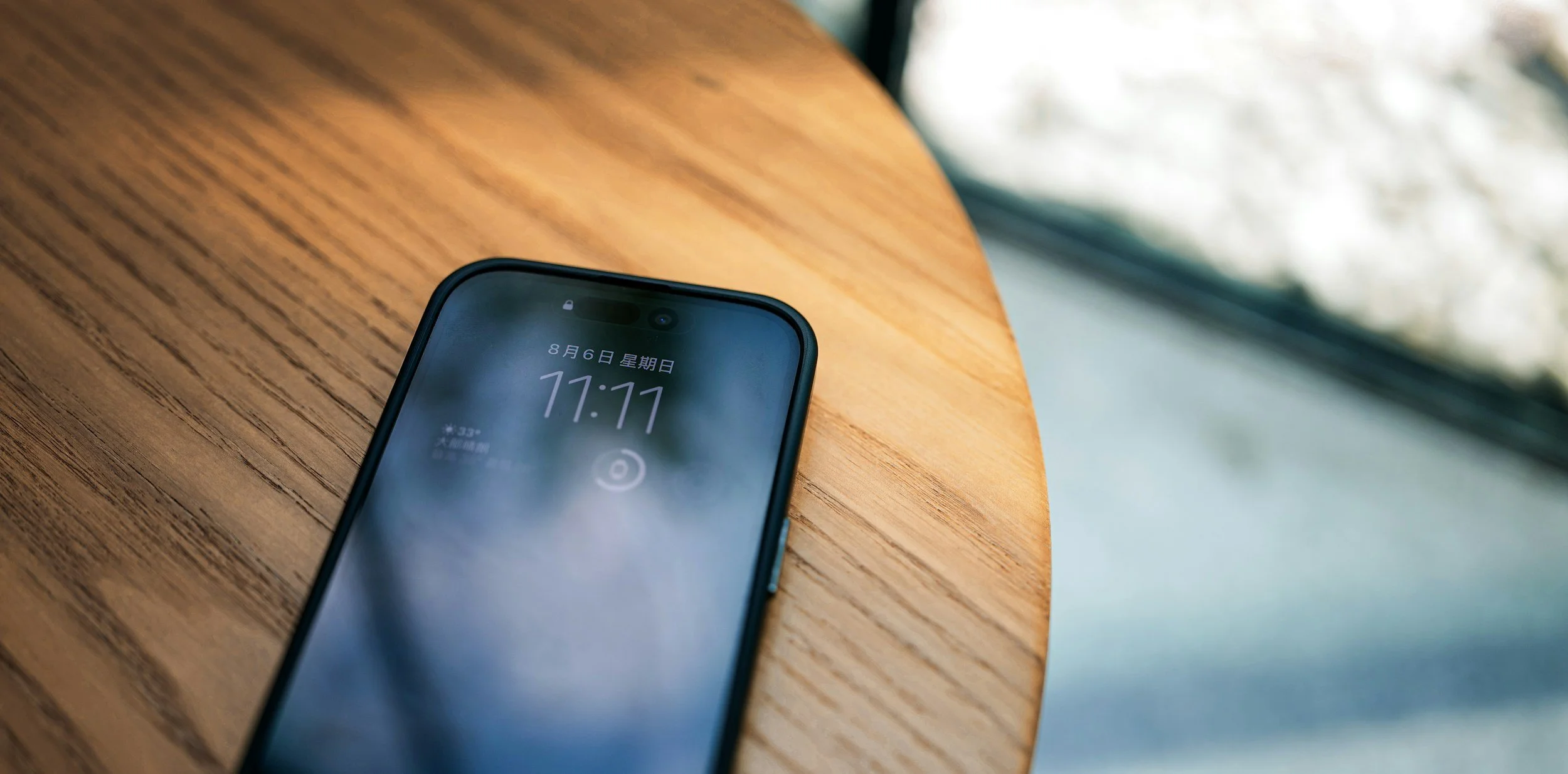
Imagine you arel finally sitting down to dinner with friends. You’ve put your phone face down on the table or tucked it away in your bag. No sound nor vibrations. You’ve managed to disconnect for the first time today. And part of your friend’s attention is elsewhere. Maybe they’re anticipating receiving a message or they are simply pulled to check on their phone. They are aware of all of their unfinished tasks and you don’t have their full attention. Even when we’re not actively using our devices, they pull for our attention. It requires so much effort for you to be present and pay attention to what is in front of you. You’re partially - but not fully present. Your existence feels fragmented and you feel frustrated with yourself for having a hard time focusing and sad about time lost to frantically trying to check items off of your ever-expanding to-do list. .
Your split attention interferes with your ability to fully relax, fully connect, rest fully and be restored. Not being able to fully come back to baseline, fuels stress and anxiety and becomes exhaustion.
The Mental, Emotional, and Physical Toll
Here are some symptoms I have observed from people living in the state of chronic stress, divided attention and being unable to relax:
Mental Symptoms
Racing thoughts or rumination
Difficulty concentrating or maintaining focus for more than a short period of time
Indecision and decision fatigue
Difficulty with identifying importance and prioritizing due to sense of constant urgency
Emotional Symptoms
Irritability, quicker to anger and frustration
Mood swings
Feeling overwhelmed and numb at the same time
Increased anxiety that is difficult to pinpoint
Physical Symptoms
Heaviness in or tight chest, shortness of breath
Headaches or stomachaches
Hard time falling or staying asleep or not getting enough sleep
Feeling very tired even when sleeping or resting enough
This is your nervous system in a dysregulated state. Your body is telling you to slow down, rest and recalibrate. There’s simply too much sensory input to handle and you cannot process it all. If you feel highly anxious, your body is working hard to adapt to the stressors that is flooding your system. Maybe you’ve tried so many things - exercise, diet, meditation, but your coping strategies just aren’t enough..
“I Just Need Better Boundaries” — And Why That’s So Hard
So many of us think “I just need better boundaries.” We erroneously assume there are simple solutions. Here are some of the things I’ve heard people say to create boundaries between themselves and their devices.
I know I just need to focus on sleep hygiene.
I’ll stop checking email after 9 p.m.
I need to get off social media.
I won’t scroll in bed.
Sometimes people are so exhausted, they are able to take the concrete steps above, but the boundaries rarely stick. But it’s not because they lack willpower or discipline. It’s because the technology is simply too powerful.
It’s not just that phones are distracting. They are designed to be hard to put down. Many apps are built around principles of behavioral reinforcement — intermittent rewards, unpredictable notifications, social validation — all of which stimulate dopamine pathways in the brain’s reward circuitry. Over time, the nervous system becomes conditioned to anticipate the next alert.
At the same time, the smartphone has consolidated countless essential tasks into one device: alarm clock, banking, scheduling medical appointments, accessing work platforms, navigating traffic, communicating with loved ones. The very tool that dysregulates us is also the tool we rely on to function.
We are trying to set boundaries with something that is both engineered to capture our attention and necessary for participating in modern life. So the device becomes both lifeline and stressor. It’s a structural reality and not a personal failure.
And even beyond and individual’s overreliance, our culture treats this level of hyper-connectivity as normal — or even essential. Being immediately responsive, always reachable, and constantly updating is no longer optional; it’s expected. Workplaces reward instant replies. Social norms expect online availability. The pace of life in cities like Oakland often assumes that everyone can—and should—operate at this speed.
We are trying to set boundaries with something that is both engineered to capture our attention and culturally expected as indispensable.
When attempts at digital boundaries fail, people often feel discouraged or ashamed:
“I should have more self-control.”
“Why can’t I just put it down?”
But this isn’t simply a discipline problem. It’s a nervous system that has been conditioned — and a culture that treats hyper-connectivity as the default.
White-knuckling your way to better boundaries rarely creates lasting change. Sustainable shifts require will happen when you stop criticizing yourself, show yourself compassion, focus on nervous system regulation and making structural adjustments.
Reclaiming Your Attention
Technology isn’t going away. And it doesn’t have to.
But we can ask ourselves what pace feels reasonable or sustainable as a human being? Would would it mean to let others wait or not respond to an email today? What does your body need to experience real rest?.
When Overwhelm Becomes Anxiety
Being too busy is different from being chronically anxious. Anxiety therapy may be helpful if you notice you:
You feel on edge most days or most of the time
You struggle to relax even when there’s downtime
Your experience disrupted sleep find it hard to quiet your mind when you wake at night
You notice you are more emotionally reactive or irritable
Your anxiety is negatively impacting your relationships
You’re feel wired and exhausted
Technology could be what is happening on the surface, but underneath there may be deeper patterns of people-pleasing, perfectionism, fear,trauma or falling behind.
Working with a trauma therapist in Oakland can help you:
Regulate your nervous system
Understand your stress and relationship patterns
Create realistic and compassionate digital boundaries
Rebuild your capacity for being present in the moment
Restore a sense of safety so you can slow down
Author Bio:

Anxiety therapist Oakland